From its roots as Black Journal to a groundbreaking national platform,
Tony Brown's Journal captured an irreplaceable record of the African American experience.
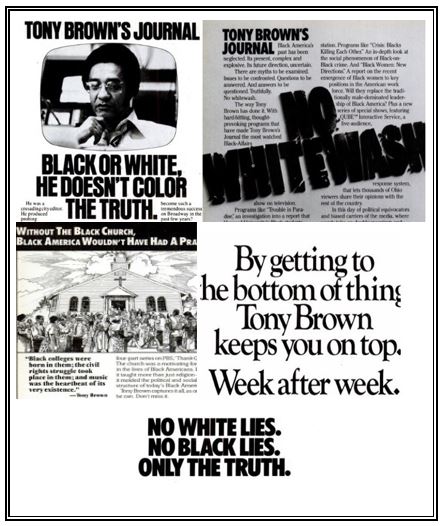
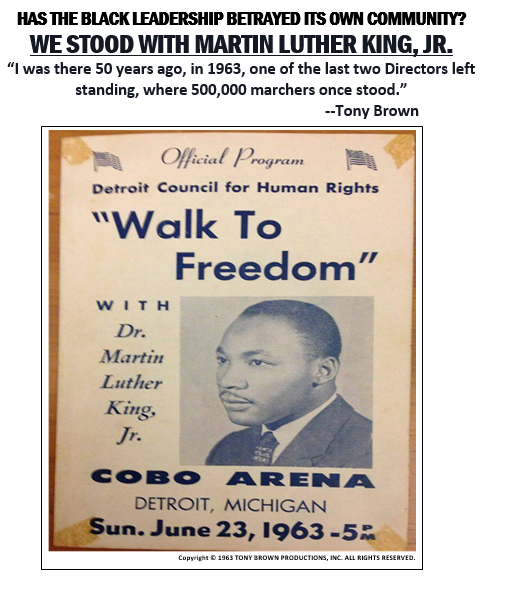
In the turbulent media landscape of the late 1960s and early 1970s, public television became an unexpected forum for Black voices striving to be heard in a nation grappling with identity, equity, and truth. Among the most consequential of these platforms was Black Journal, a New York–based public television program that debuted in 1968. When Tony Brown assumed leadership of the program in 1970 as executive producer and host, the show entered a transformative phase—one that would ultimately lead to the creation of a historic broadcasting institution.
Under Brown’s stewardship, Black Journal evolved from a promising experiment into a bold, unapologetic vehicle for commentary, documentary storytelling, and public-opinion discourse centered on African American life. The program distinguished itself by blending journalistic rigor with cultural advocacy, offering viewers a rare, unfiltered lens into the political and social realities of the time.
However, Brown’s tenure was not without conflict. His outspoken critiques of U.S. policy and its impact on Black communities struck a nerve across both mainstream broadcasting institutions and segments of the very community he sought to represent. As tensions mounted, the Corporation for Public Broadcasting made a pivotal—and controversial—decision in 1973 to withdraw funding from Black Journal.
The response was swift and nationwide. Protests erupted, underscoring the program’s importance as a voice of accountability and representation. Though the loss of funding forced the show to operate at reduced capacity, its survival during this period testified to both its cultural significance and the determination of its supporters. In many ways, the crisis foreshadowed a larger transformation that would soon redefine the program’s future.
That turning point arrived in 1977. Securing a groundbreaking sponsorship agreement with the Pepsi-Cola Company, Tony Brown relaunched the program under a new name: Tony Brown’s Journal. The rebranding symbolized more than a name change—it marked the reclamation of editorial independence and the beginning of a new chapter in television history.
With its return to broader distribution, the newly titled Tony Brown’s Journal aired on both commercial and public television, ultimately becoming a nationally syndicated series with unmatched longevity. Over the next four decades, it would grow into the longest-running series in PBS history, achieving both critical acclaim and widespread recognition.
The program’s accolades reinforced its standing as a cornerstone of American broadcasting. It earned an Emmy nomination, received the 1991 NAACP Image Award for “Outstanding News, Talk or Information Series/Special,” and, at one point, was recognized as the No. 1-rated syndicated talk/educational national TV series according to A.C. Nielsen.
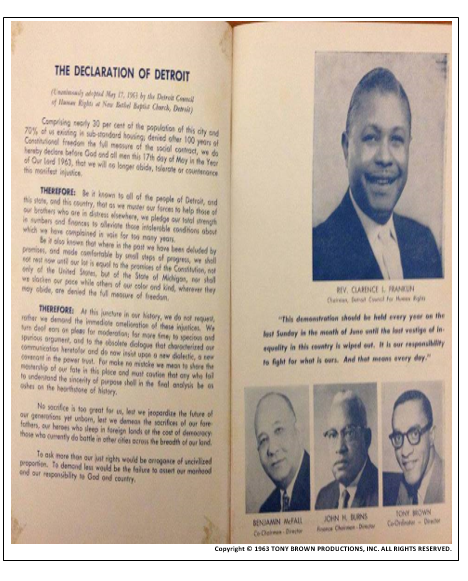
Yet beyond ratings and awards, Tony Brown’s Journal served a deeper purpose. Through original interviews, commentary, and documentary features, it captured the voices, movements, and lived experiences of African Americans across generations. The program became a living archive—one that documented not only events but perspectives, offering context and authenticity that cannot be reconstructed.
Today, the legacy of Tony Brown’s Journal stands as both a triumph of perseverance and a testament to the power of media to shape historical understanding. It’s more than 40 years of continuous production from an irreplaceable cultural resource, preserving contemporaneous viewpoints that no modern recreation could fully duplicate.
A Legacy That Must Endure
The story of Tony Brown’s Journal is not merely one of a television program—it is the story of a national dialogue, courageously sustained in the face of institutional resistance and societal change. As both a historical record and a cultural archive, the series represents a body of work whose value extends far beyond its original broadcast. It is a repository of voices otherwise lost to time, a chronicle of struggle and progress, and a mirror reflecting the evolving fabric of American life. Preserving this legacy is not simply an act of remembrance; it is a responsibility. For in safeguarding the enduring contributions of Tony Brown and his groundbreaking journal, we ensure that future generations inherit not only the lessons of the past but the unfiltered truths that shaped them.
Step into a legacy. Unlock rare, powerful insights into history’s defining moments—stories that challenge, inspire, and elevate. Stream groundbreaking episodes now at TonyBrownsJournal.com 📚 Be among the first to receive updates on Tony Brown’s final and most personal work, Walking Between The Raindrops: tonybrownsjournal.com/Upcoming-Book
#Legacy #History #Innovation #Teacher #Education #HistoryUnfiltered #BlackVoices #HistoryEchoes #UnshacklingTheMind #RememberOurOrigins #Share #BlackHistory365